As Synthesis Teams is a subscription-based serious game platform, gameplay video & detailed info cannot be displayed on this website per company policy. Please feel free to reach out if you'd like to learn more about my work.
Ducks Amok
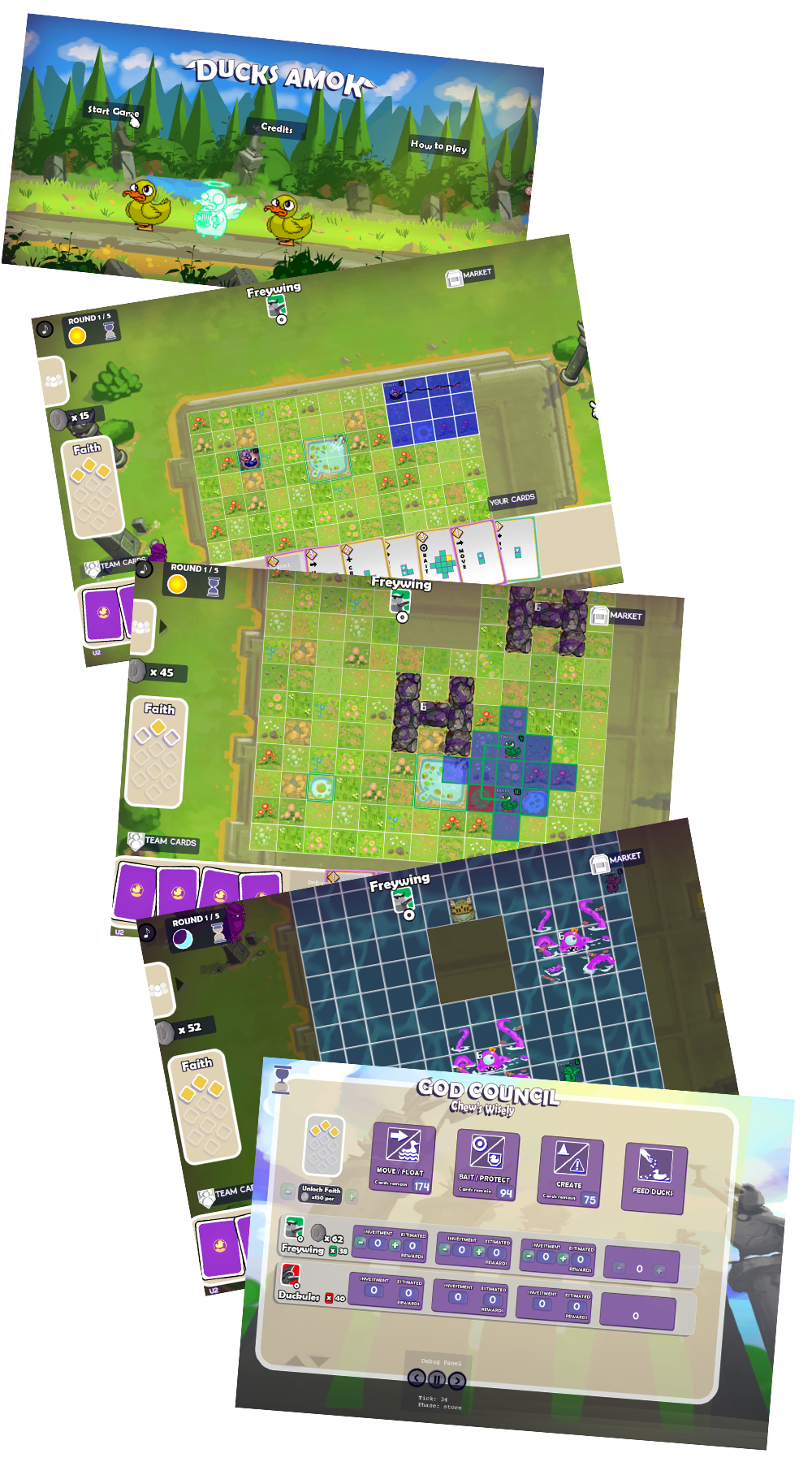
In a world where gods protect their duck followers, the Phantom Owl emerges each night to corrupt the land, collecting the souls of unprotected ducks to spread its darkness. As dusk falls, the world becomes perilous, with the ground turning into a vast sea and obstacles coming to life, leaving only the sacred ponds as temporary sanctuaries. The gods must guide their ducks safely through the dangers toward Ducktopia, a radiant gateway to salvation, all while fending off the Phantom Owl and competing with each other to earn the faith of their followers.
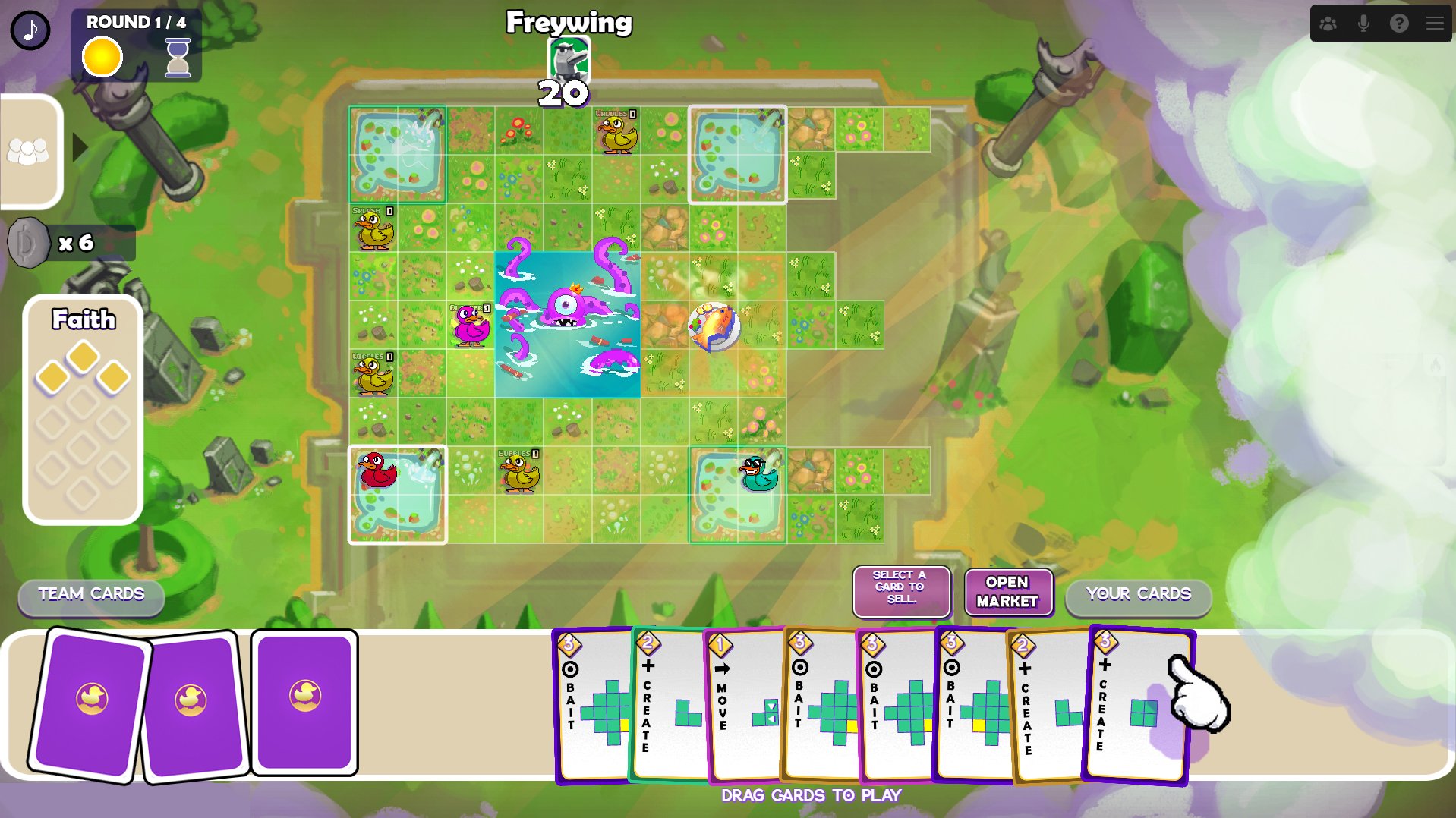
Teams: gods of ducks
Ducks: ducks can move on the map (world)
Map: Tile-based
Move: Ducks can move one tile/tick
Tick: each tick lasts for 2 sec
Interaction between gods and the world
Card is the only way for gods to affect the world
Players
Each player in a team has cards to play in their hands
Collaborate with teammates to guide ducks into Ducktopia
1 score / live duck moved into Ducktopia
Win condition
Competitive mode: The team with the highest score (the number of ducks guided to Ducktopia) wins
Collaborative mode: Phantom Owl corrupts the ducks and leads them to Ducktopia. The team needs to guide more ducks than Phantom Owl.
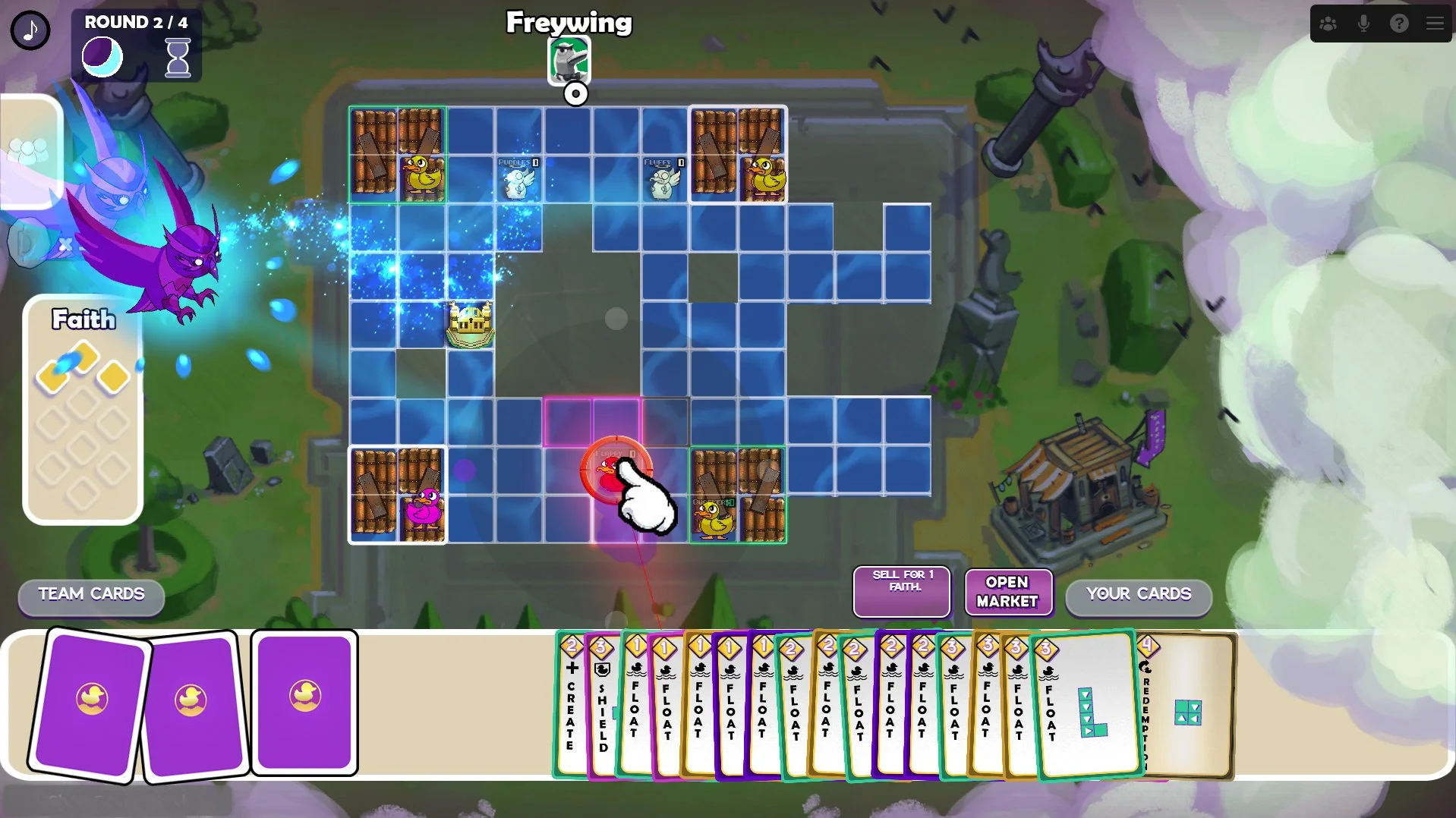
Gameplay Loop
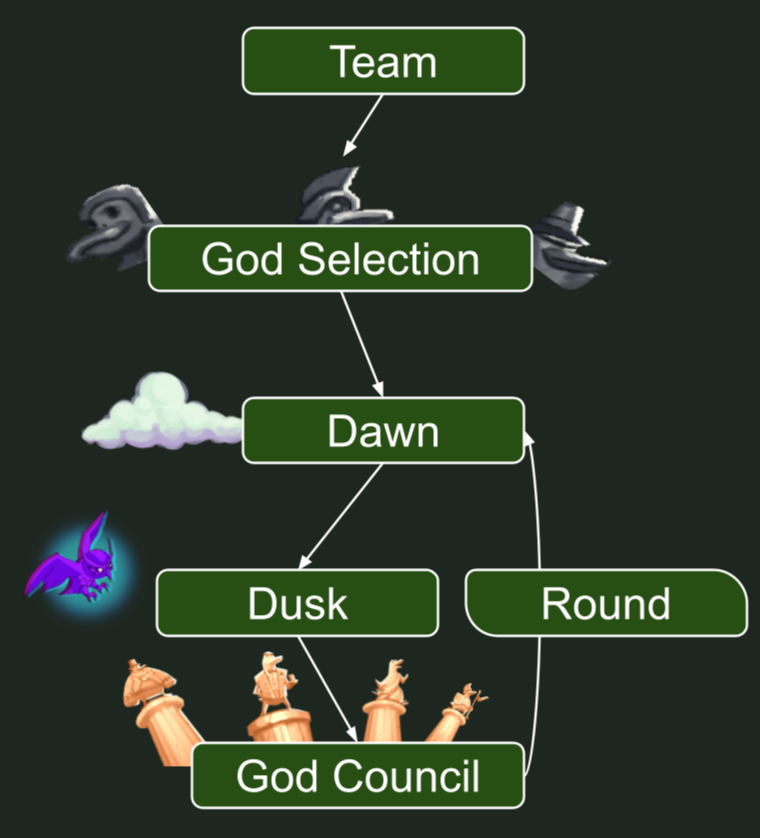
God Selection
A team votes to select a god of ducks with unique abilities.
Dawn
During this phase, the world is safe. Gods (teams) use cards to guide ducks into ponds. Only ponds can protect ducks from the dangers of night.
Dusk
As the Phantom Owl's corruption spreads across the world, Ducktopia emerges as the only sanctuary. It falls upon the gods to guide their lost flocks there before darkness takes hold.
Unprotected ducks turn into Ghost Ducks — guiding them to Ducktopia yields Faith, but no score.
God Council
Gods spend Faith Surplus — the game's currency — to acquire new cards.
Cards are limited. During each God Council phase, gods auction and negotiate for cards.
Core Gameplay Systems
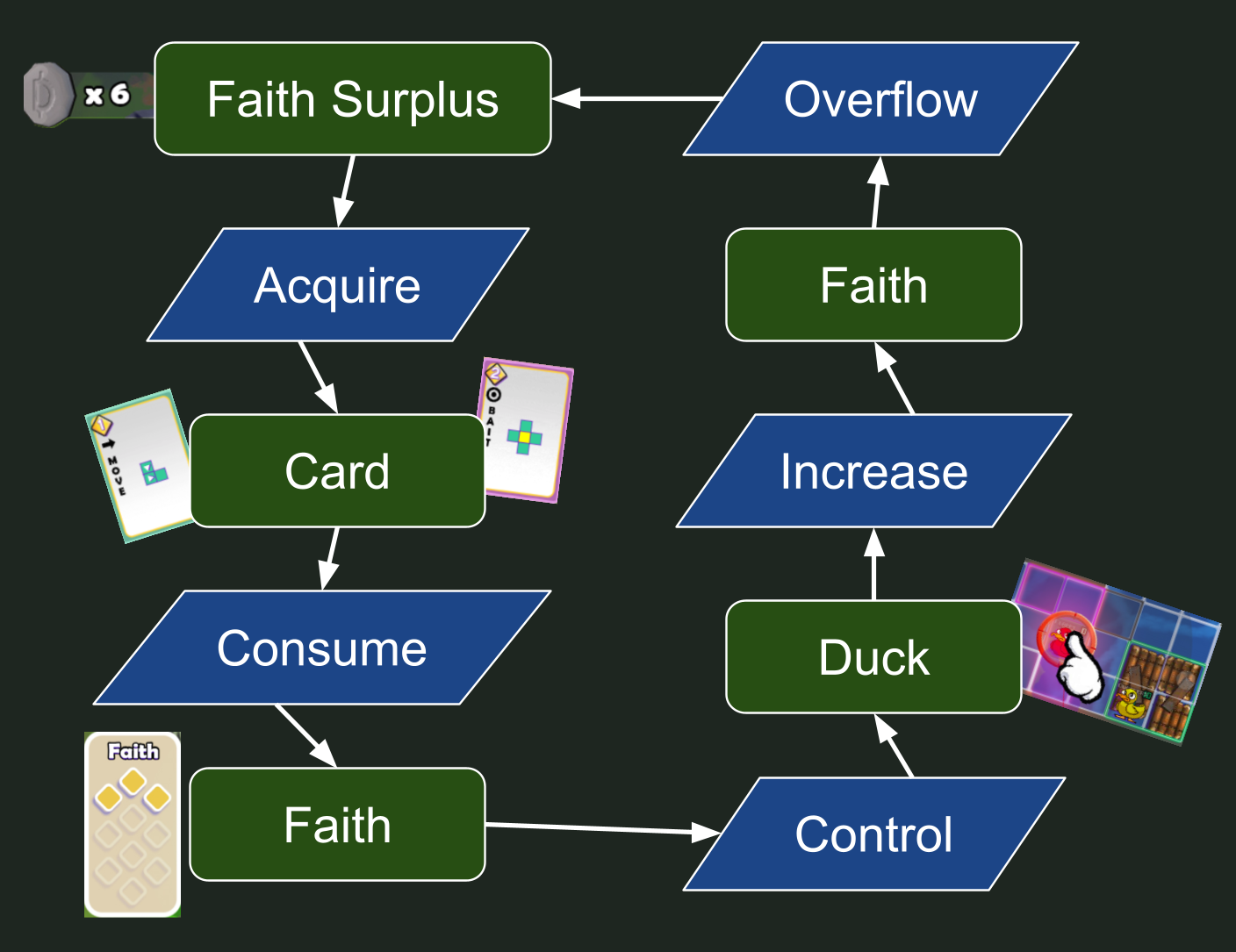
Faith:
Ducks under a god's control — known as Believers — generate Faith over time.
Gods start with three Faith slots, expandable by spending Faith Surplus.
All cards cost Faith to play.
Card:
Card is the only way to interact with the world.
Cards come in four types — Move, Bait, Create, and Convert — each with four tiers of increasing power and unique effects.
During the Dusk phase, all cards transform — becoming Float, Shield, Destroy, and Recover respectively.
Cards consume faith. Higher tier requires more faith.
Ducks affected by the cards are controlled.
Control:
Ducks can be controlled — gods strengthen their own control while rivals fight to weaken and seize it.
A god can only directly move a duck controlled by them.
Faith Surplus:
When Faith exceeds the maximum slot capacity, it overflows into Faith Surplus.
Faith Surplus is the sole in-game currency, used to acquire new cards and expand Faith slots.
Design Principle
Multi-Round Strategic Planning
Every round is a step in a longer journey — plan which ducks to prioritize moving toward Ducktopia across multiple rounds
Ducks left unprotected at night are lost to the Owl; protecting the right ducks at the right time is a long-game decision
Ducktopia only appears at night — teams must position ducks during the day, requiring foresight a full phase ahead
Ghost ducks sent to Ducktopia yield faith, not score — sometimes sacrificing points for economic gain is the right call
The Faith Loop
Faith fuels cards → cards build duck control → control generates faith → surplus faith buys better cards at Council
Contesting enemy ducks is more faith-efficient than reinforcing your own — aggression has a built-in economic reward
Letting faith surplus go to waste is a strategic mistake; every overflow is an investment opportunity
Card Economy
Council investment is a team-wide commitment — spending on the wrong card categories can cripple the next round
Higher investment unlocks rarer cards, but can reduce total card count — quality vs. quantity is a real tradeoff
The Market lets teams liquidate unwanted cards — knowing when to sell vs. hold adds another layer of decision-making
Coordination Over Individual Play
Cards are distributed among players — no one controls everything; team coordination is the core skill
Players naturally specialize by hand composition, creating emergent roles each round
Day & Night as Interlinked Phases
Day is about positioning; Night is about cashing in — reactive teams will always be underprepared
Every card flips at nightfall — the same resources serve entirely different purposes depending on timing
Contested Space
Every duck is a battlefield — ignoring neutral ducks is always an opportunity cost
Obstacles, ponds, and baits serve both offensive and defensive purposes; context defines their value
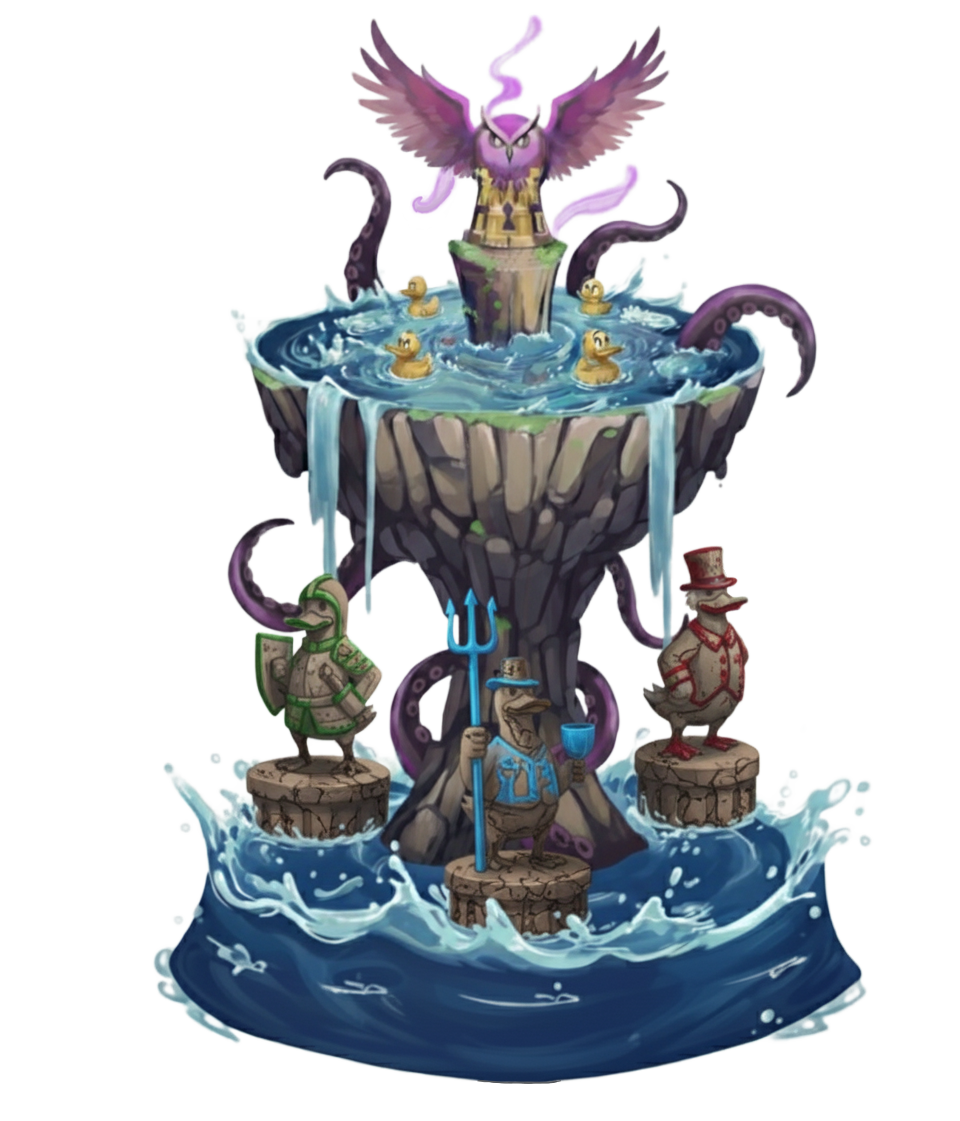
My art work: Ducks Amok Trophy