As Synthesis Teams is a subscription-based serious game platform, gameplay video & detailed info cannot be displayed on this website per company policy. Please feel free to reach out if you'd like to learn more about my work.
Polis
Polis is a team-based, real-time strategy game set in the world of mythological Ancient Greece. Players work together as a team to build and manage a city-state (polis), constructing production chains, managing citizens, earning the favor of the Olympian gods, and accumulating prestige to achieve victory. Matches can be played cooperatively against the clock or competitively against rival polises.
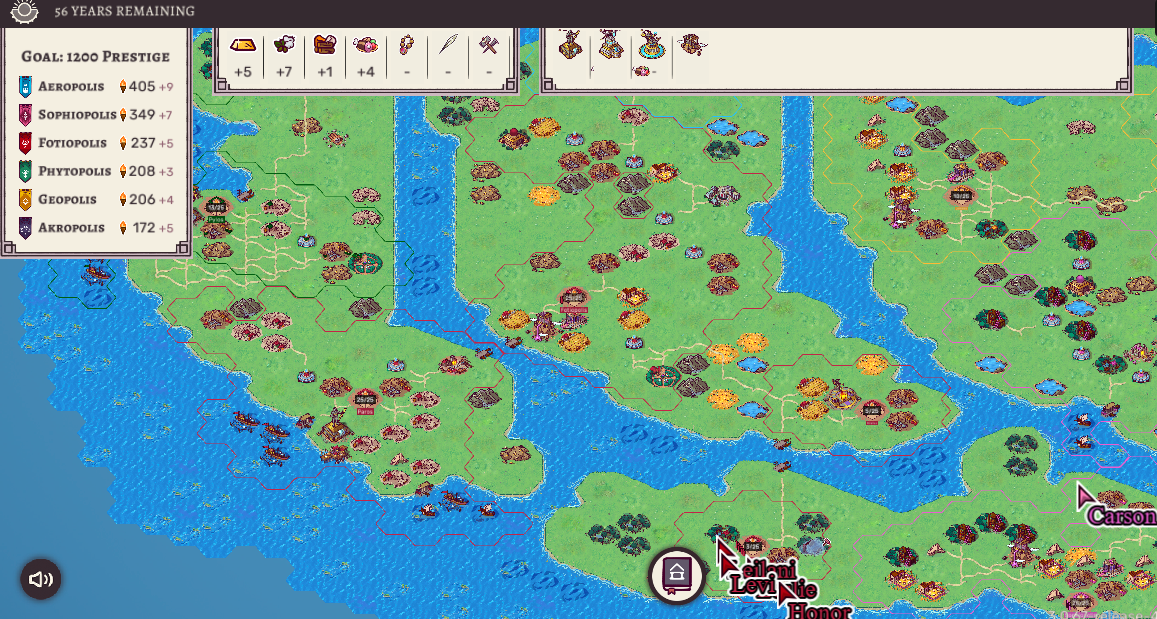
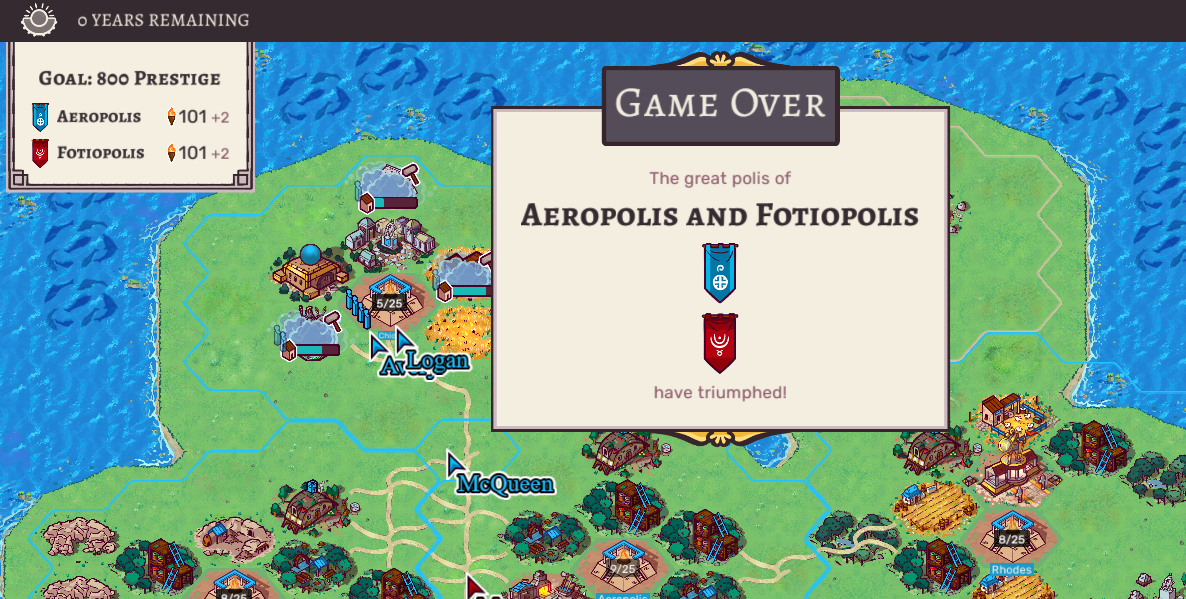
Gameplay Loop
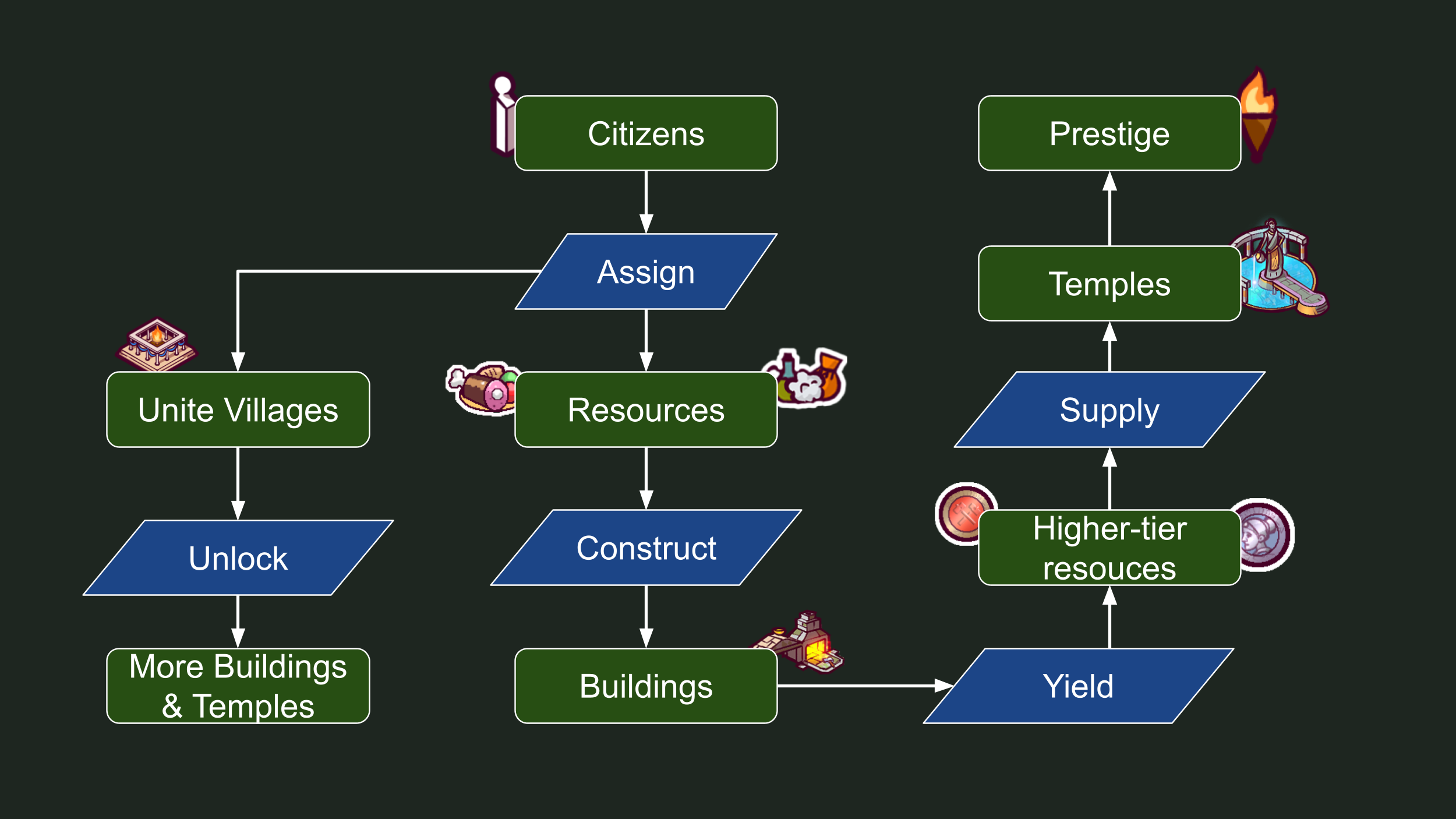
Citizens are assigned to work, driving everything in the loop
Spending resources to construct buildings generates more resources in return
Buildings yield higher-tier resources, which supply temples
Resources flow through a supply chain — from basic extraction, refined into higher-tier resources, then fed into temples
Uniting villages unlocks more buildings and temples to build
Temples consume higher-tier resources to produce Prestige
Reach the Prestige goal to win
Supply Chain
Supply chain is the core gameplay system of Polis 3.0, requiring players to collaborate and coordinate in real time to keep resources flowing efficiently across all production tiers.
Structure
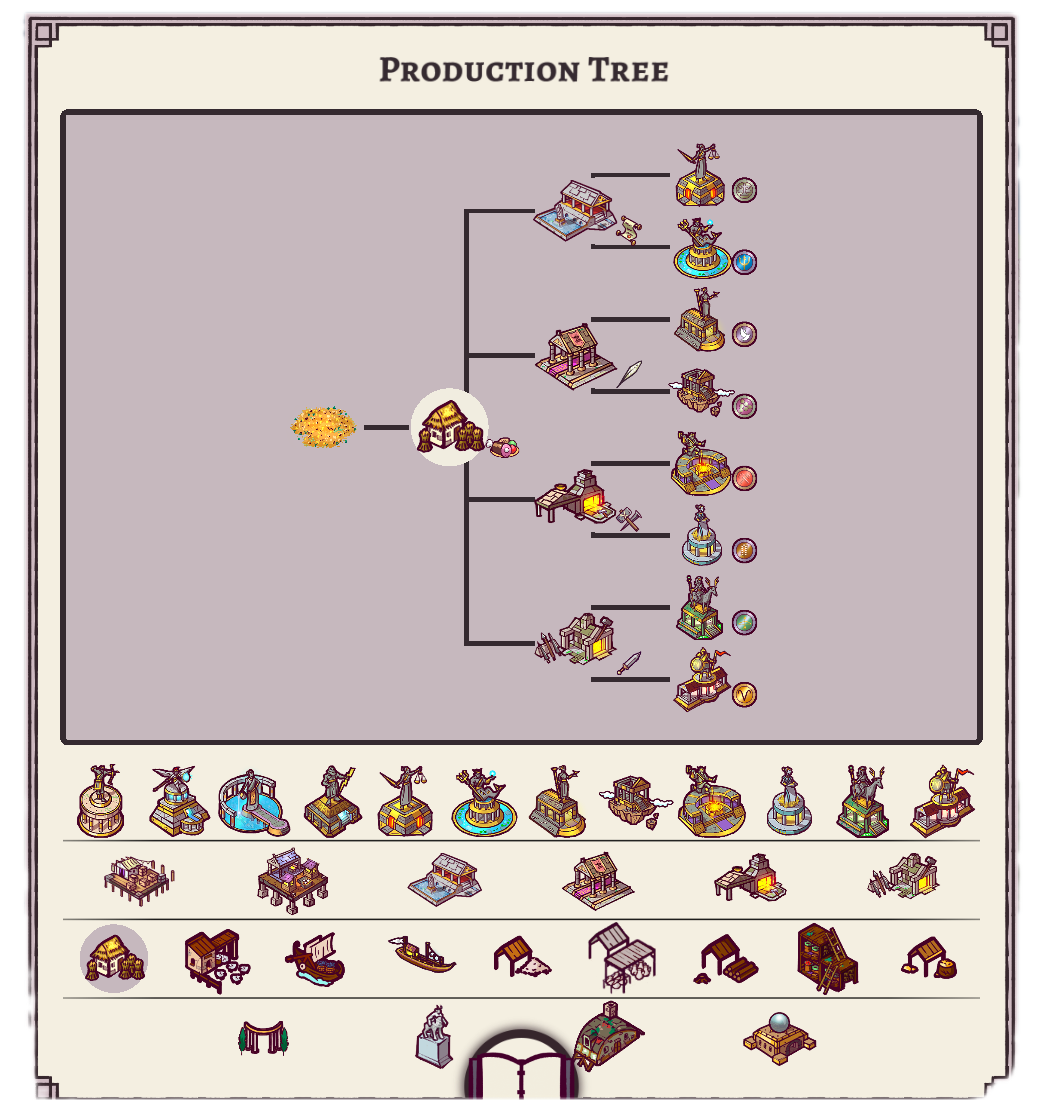
The supply chain has three tiers: raw resources → refinements → temples
A single raw resource feeds into the empire (team), which branches into multiple refinement buildings
Each refinement building then unlocks two god temples, giving eight possible temples in total from one resource source
How It Works
Raw resources are harvested from terrain and pooled in the village depot
Refinement buildings draw from the depot and process them into higher-tier resources
Those refinements are then consumed by temples to generate Prestige tokens
Importantly, an entire team's empire shares one single depot — all villages united under the same team contribute to and draw from the same resource pool
Maintaining the Supply Chain
Monitor resource bars and reassign idle citizens to fix shortages before they stall the chain
Balance extraction and refinement — over-investing in one without the other wastes citizen slots
Expand to new villages when territory runs out, connecting them via roads to feed the shared depot

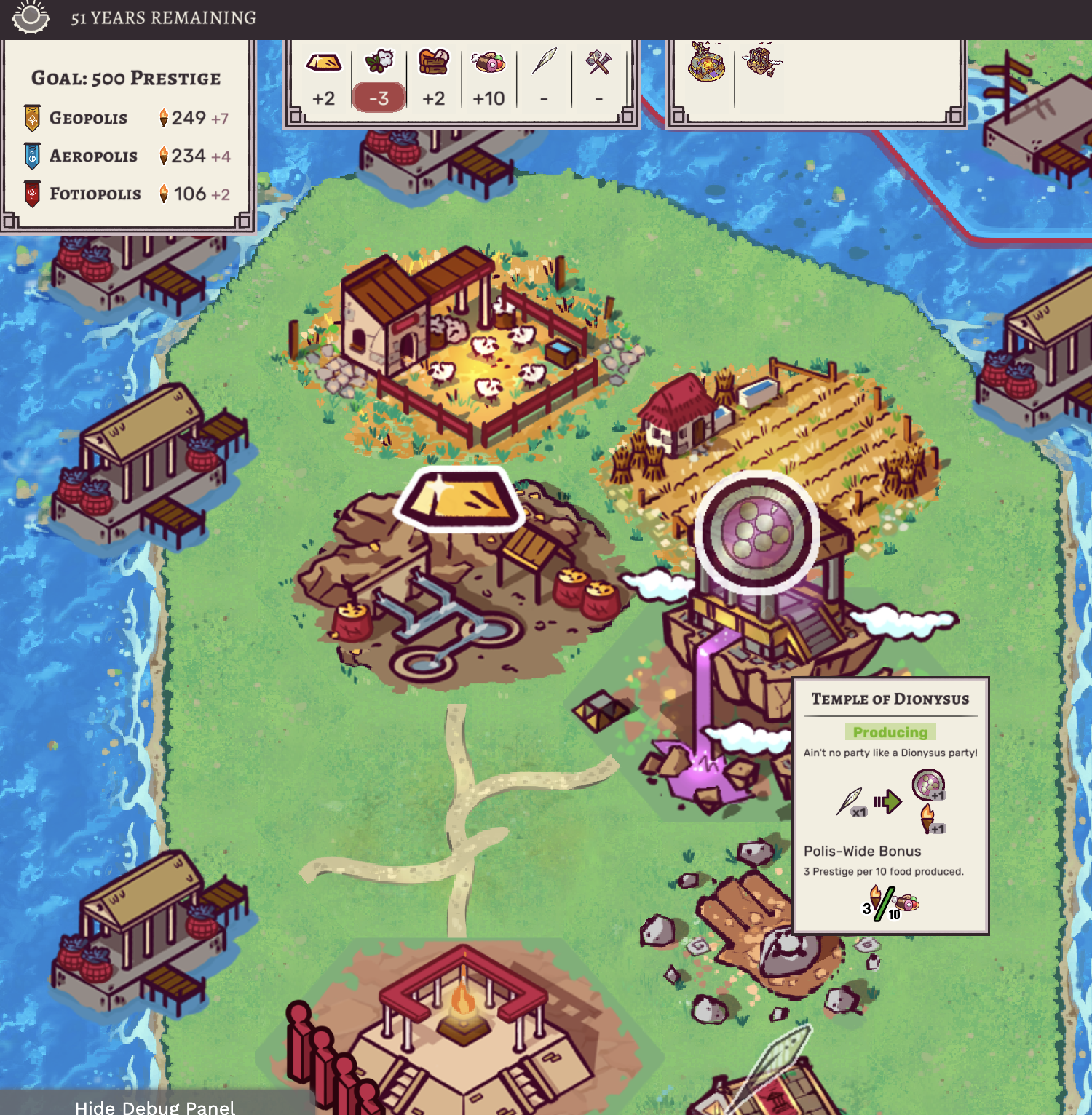
Synergizing Temples
Temple Combinations & Strategic Depth
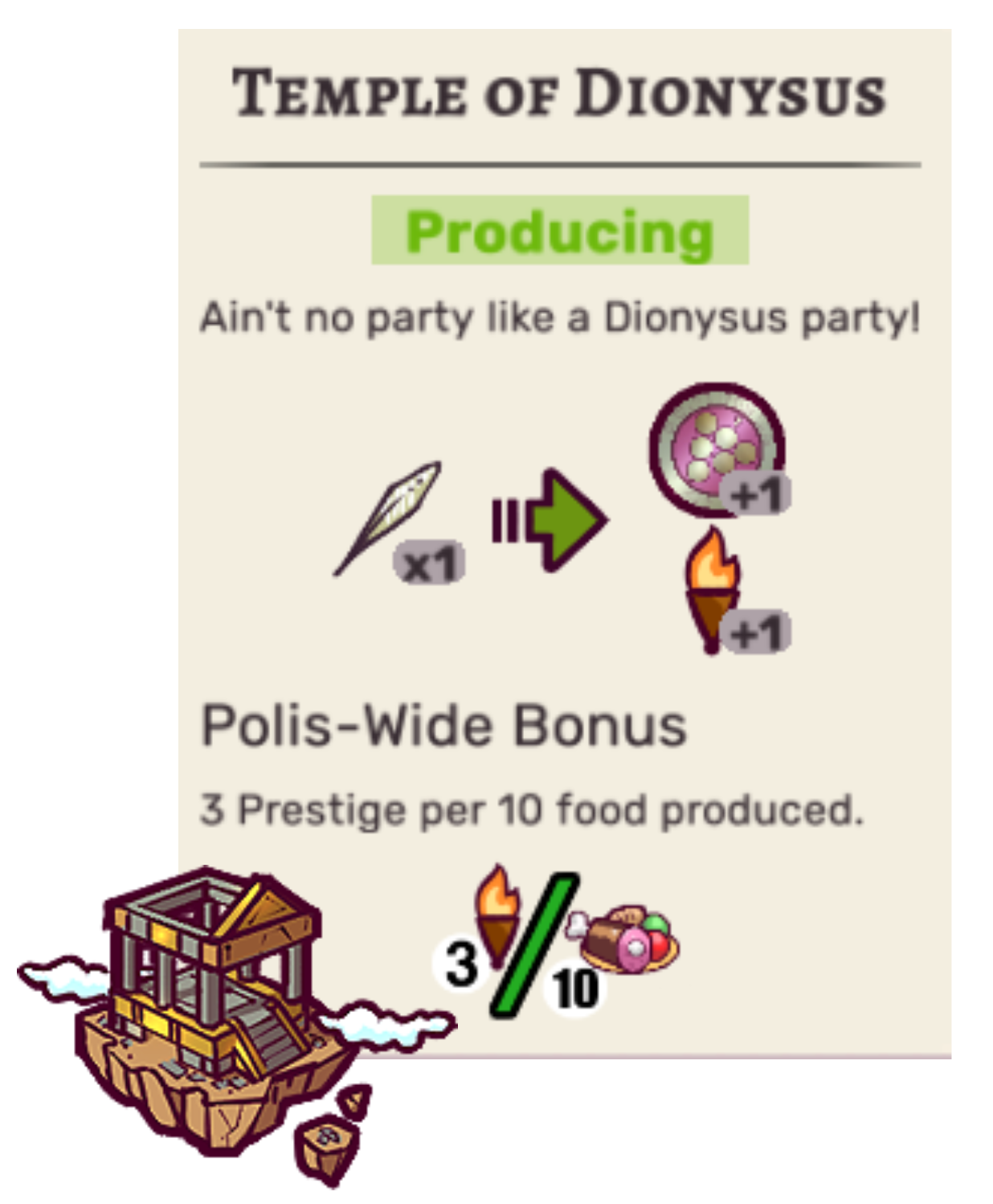
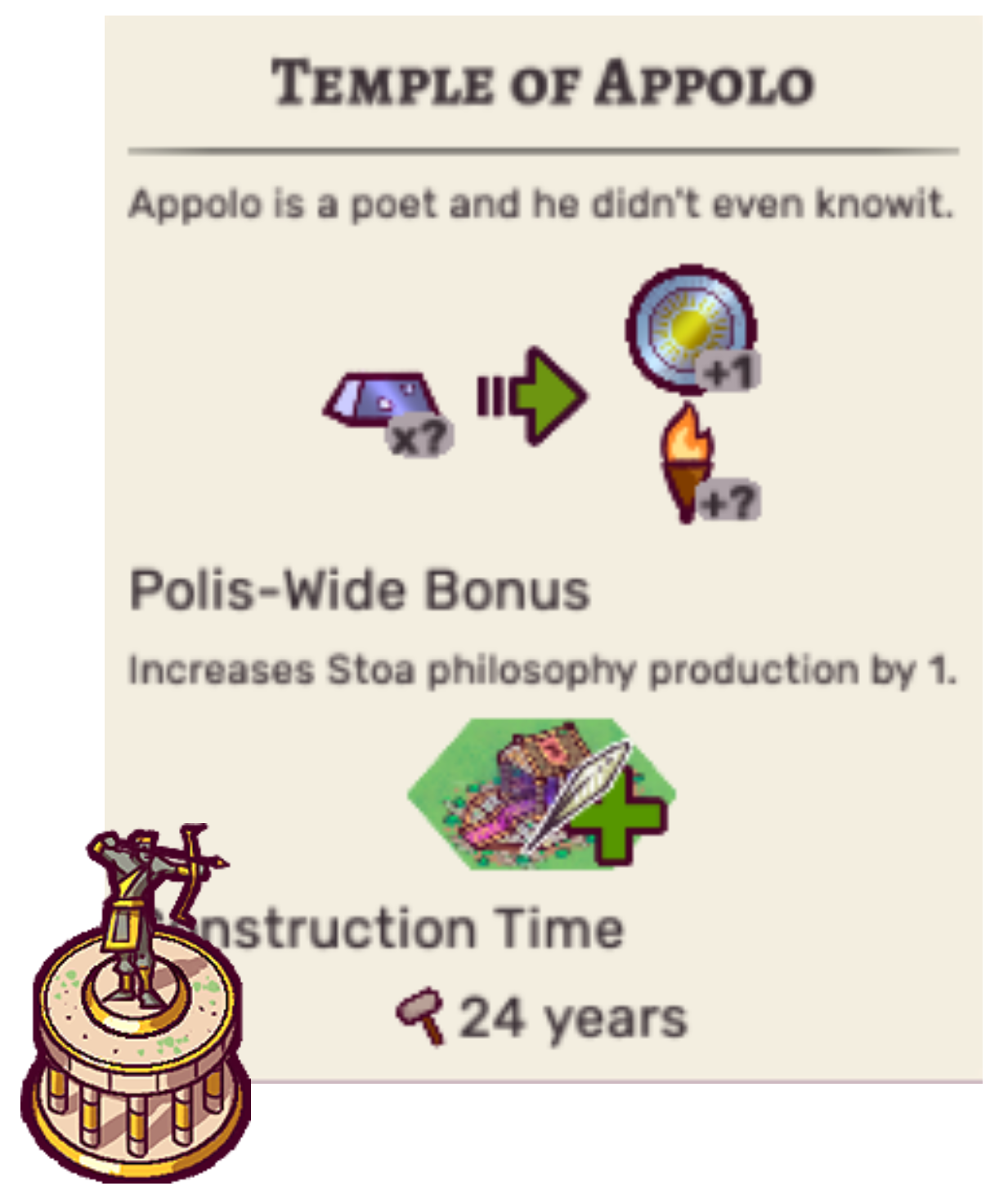
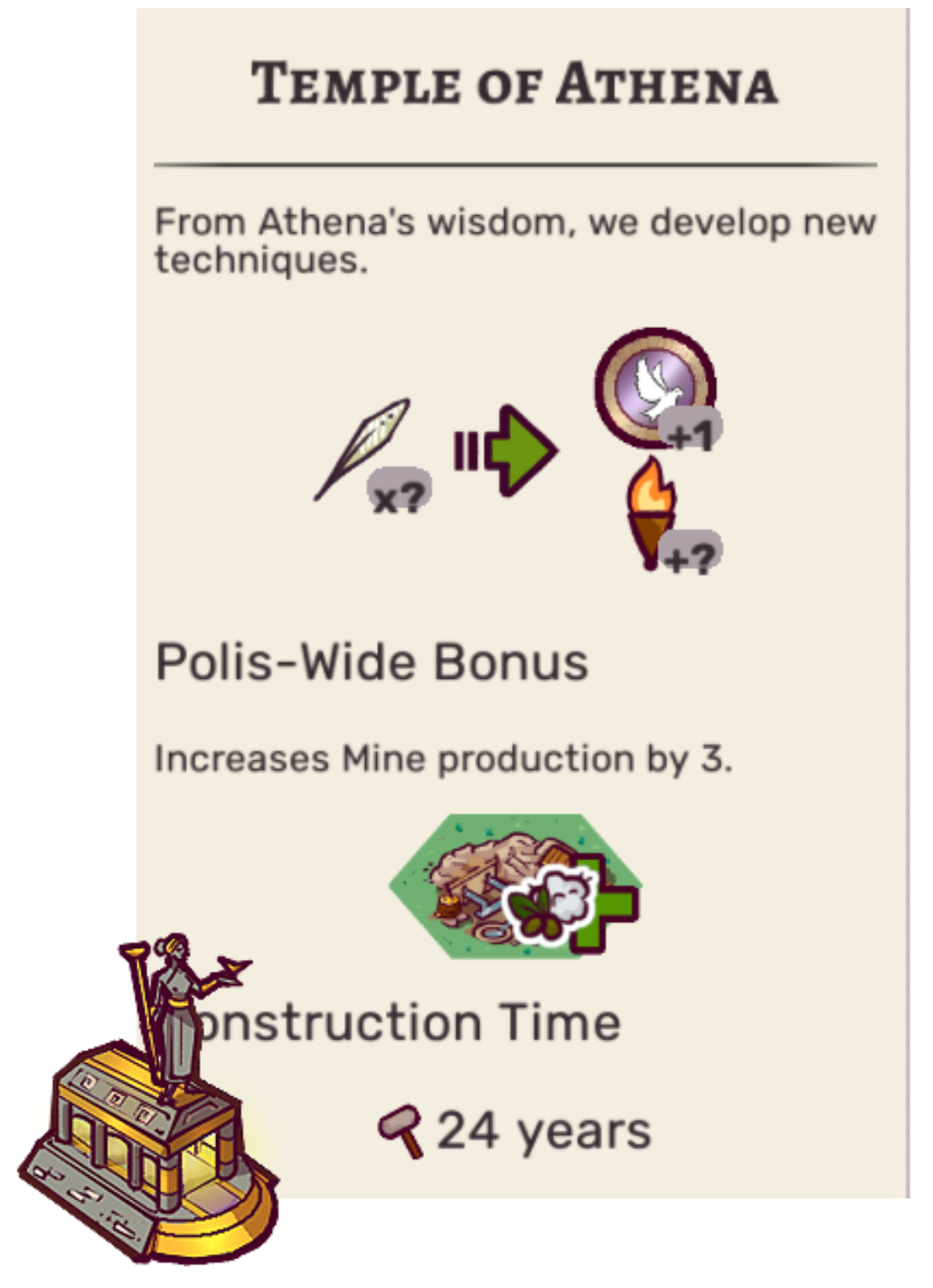
Each god temple does two things simultaneously: generates Prestige and applies a Dominance bonus that buffs your economy — the key is choosing temples whose bonuses feed into each other
This creates a chain reaction design: one temple strengthens production, which fuels the next temple, which generates more Prestige than either would alone
For example, Demeter boosts food production across the polis — on its own, that's a useful economic bonus; but pairing it with Dionysus, whose Prestige output scales with surplus food, turns that bonus into a direct Prestige multiplier
This interdependency rewards players who plan their temple path ahead of time rather than reactively building whatever they can afford
It also creates meaningful differentiation between teams — two teams with the same temples but different build orders will have very different Prestige outputs
Design Principle
Accessible but Deep
Drag-and-drop controls keep moment-to-moment play simple and intuitive for new players
Strategic depth emerges from the economy system, not from complex inputs — anyone can play, but mastering temple combinations and supply chains takes skill
Teamwork as a Core Mechanic
The shared depot means no single player can win alone — coordination and communication are built into every decision
Citizens are scarce, so dividing responsibilities between teammates is essential rather than optional
Meaningful Choices at Every Stage
Early game: which resources to extract and which buildings to prioritize
Mid game: which refinement path to commit to
Late game: which temple combinations to synergize for maximum Prestige output
No stage of the game plays itself — players are always making decisions
Economy Over Combat
Victory is determined entirely by how well you build and manage your economy, not by attacking opponents
Competition comes from racing to Prestige goals and denying resources, keeping the tone constructive rather than destructive
Specialization Over Uniformity
The production tree rewards players who double down on a chosen path rather than spreading evenly across all resources
Different temple combinations lead to genuinely different playstyles, giving each match a unique flavor

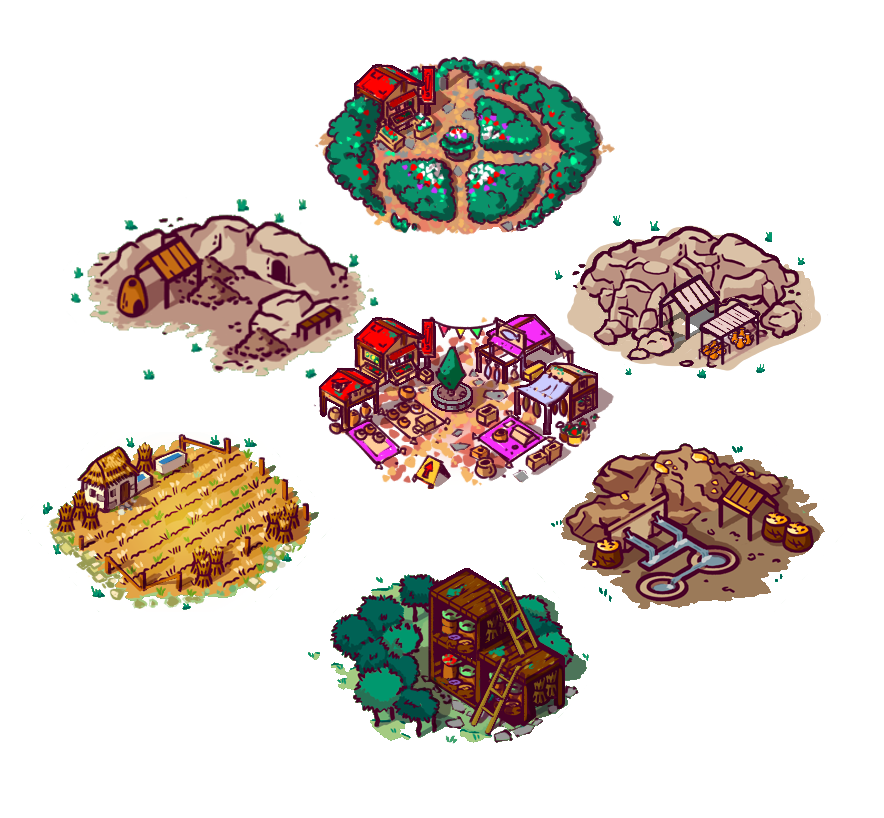
My Artwork in Polis